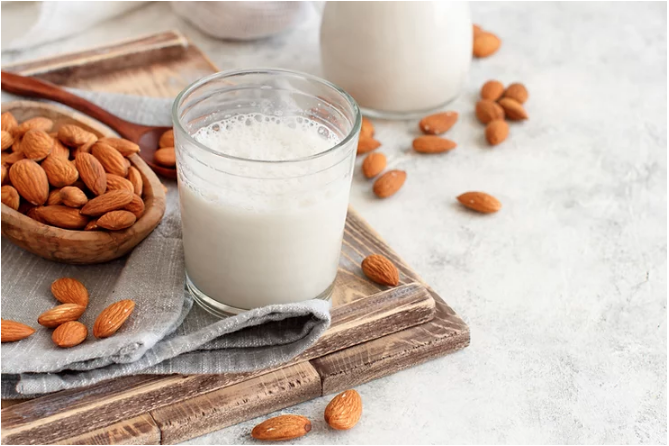
When transitioning to a Pure Diet or plant-based diet, it’s important to pay attention to certain nutrients that are essential for maintaining good health.
A balanced plant-based diet should include:
Protein, Vitamin B12, Vitamin D, Calcium, Iron, Omega-3 fatty acids, Zinc, Iodine, Selenium, and Vitamin C
Protein
Why it matters: Builds and repairs muscles, tissues, and enzymes.
Early signs of mild deficiency: fatigue, hair thinning, weak muscles, frequent hunger.
Daily requirement: Most adults need about 0.8 g of protein per kg of body weight (more if very active).
• Example: A 70 kg person → ~56 g protein/day.
Good vegan sources:
• Beans (lentils, chickpeas, black beans)
• Tofu (~10–15 g per 100 g) and tempeh (~19 g per 100 g)
• Soy milk (~7–9 g per cup)
• Quinoa (~8 g per cup)
• Nuts and seeds (almonds ~6 g per handful, peanuts ~7 g per handful)
Vitamin B12
Why it matters: Essential for nerve function and red blood cell production. Deficiency can cause fatigue and neurological issues.
Important: B12 is not naturally present in plant foods; supplementation is necessary for vegans.
Sources:
• Fortified plant milks
• Fortified breakfast cereals
• Nutritional yeast
• B12 supplements
Vitamin D
Why it matters: Supports bone health and immunity.
Sources:
• Sunlight exposure
• Fortified plant milks
• Mushrooms exposed to UV light
• Supplements if sunlight is limited
Calcium
Why it matters: Supports bone and teeth health.
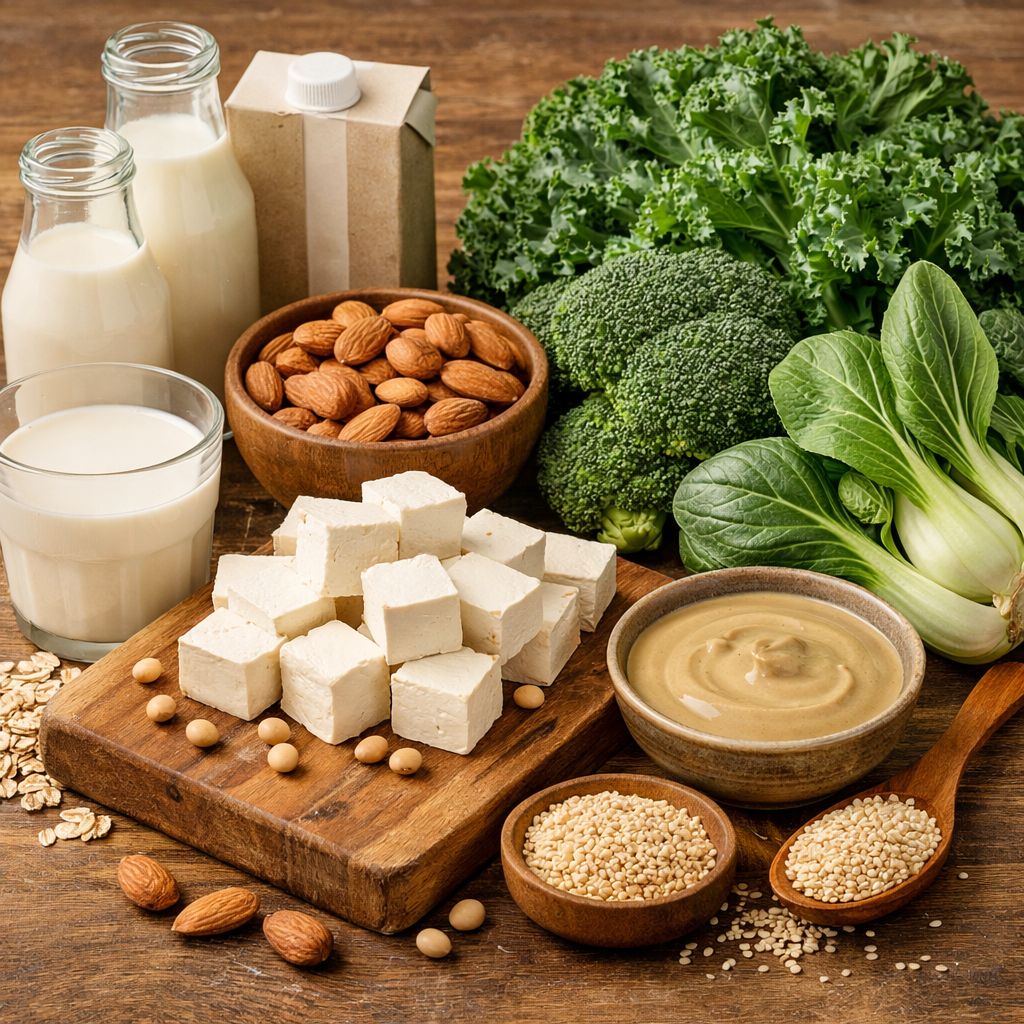
Vegan sources:
• Fortified plant milks
• Tofu set with calcium
• Almonds
• Sesame seeds / tahini
• Kale, bok choy, broccoli
Omega-3 Fatty Acids
Why it matters: Important for brain and heart health and has anti-inflammatory functions.
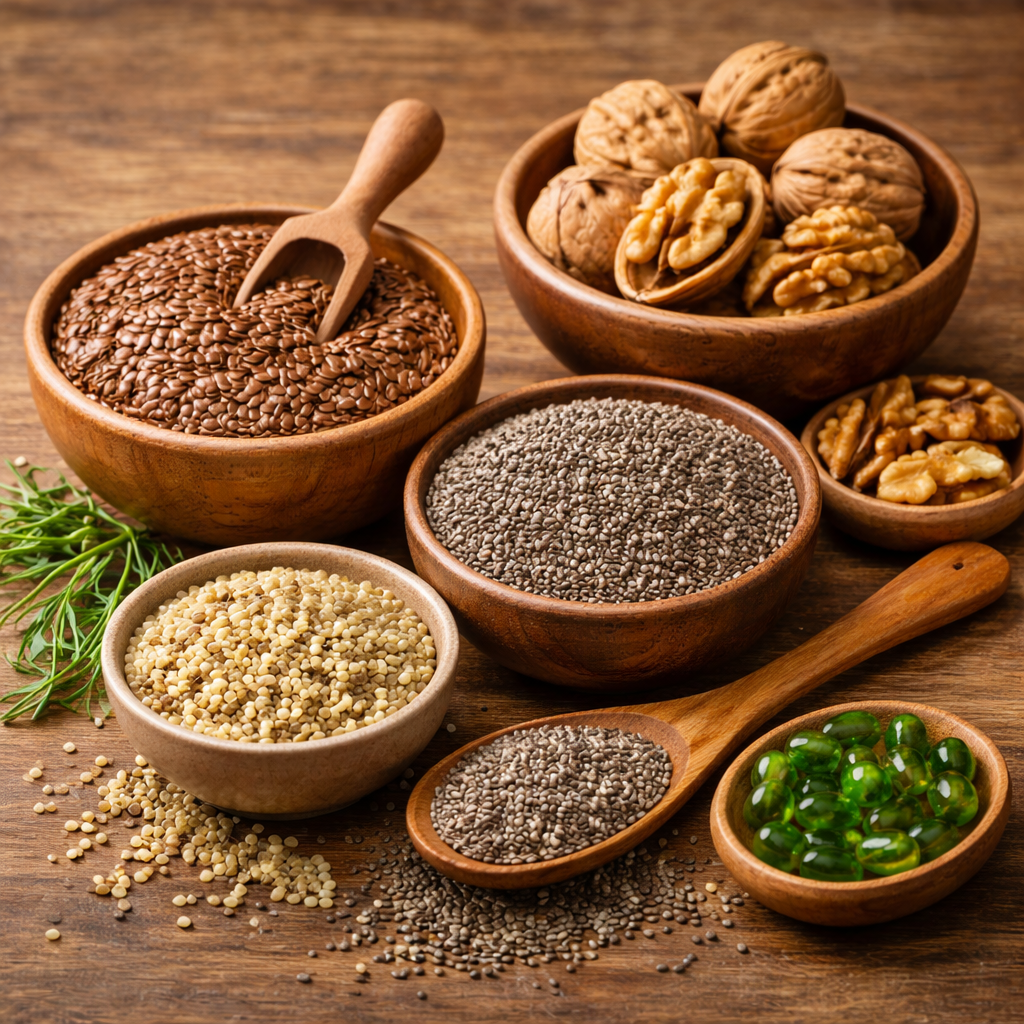
Good vegan sources:
• Flaxseeds
• Chia seeds
• Walnuts
• Hemp seeds
• Algae-based omega-3 supplements (EPA/DHA)
Iron
Why it matters: Essential for oxygen transport in the blood. Plant-based (non-heme) iron is less efficiently absorbed.
Tips for absorption:
• Eat with vitamin C-rich foods (citrus, bell peppers, tomatoes).
• Avoid tea, coffee, and high-calcium foods during iron-rich meals.
Sources:
• Lentils
• Spinach
• Chickpeas
• Tofu
• Pumpkin seeds
Zinc
Why it matters: Supports the immune system, metabolism, and wound healing.
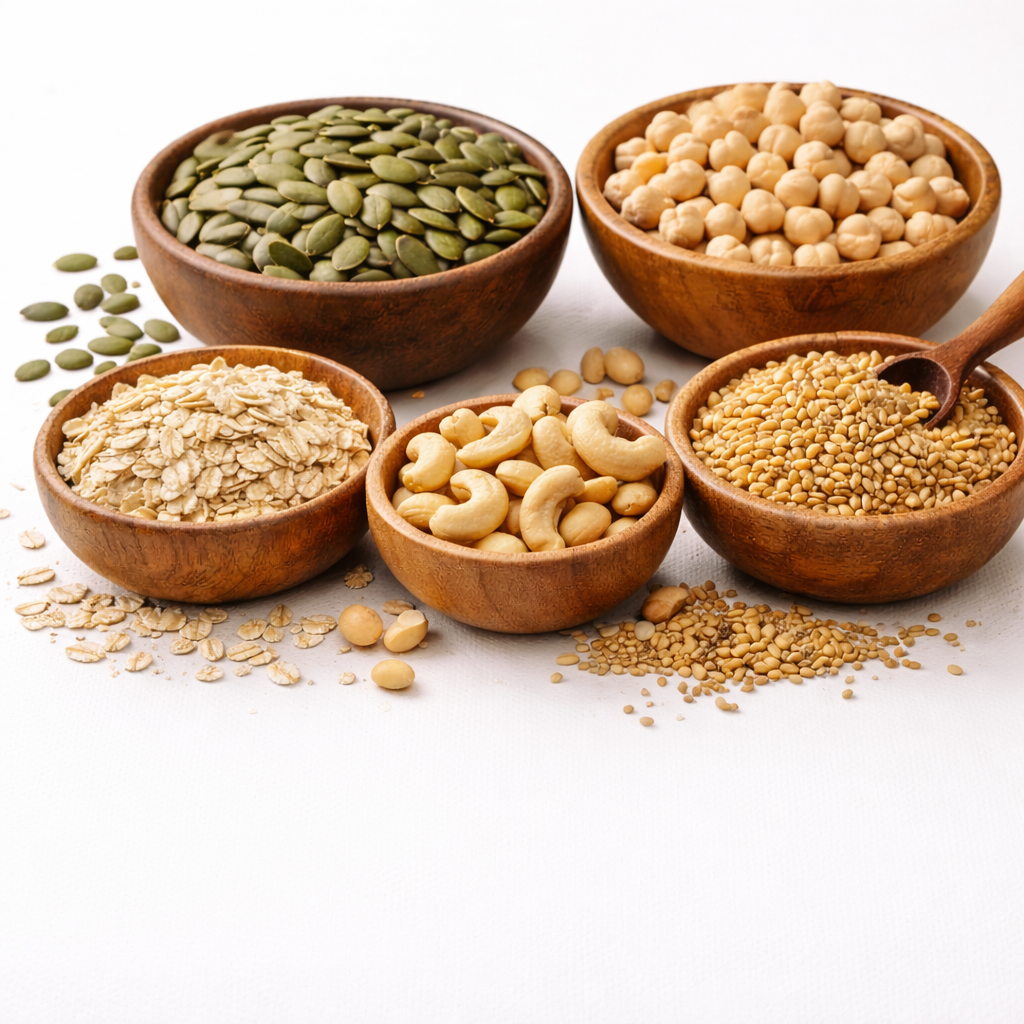
Sources:
• Pumpkin seeds
• Chickpeas
• Oats
• Cashews
• Whole grains
Iodine
Why it matters: Supports thyroid function and metabolism.
Sources:
• Iodized salt
• Seaweed (in small amounts)
Selenium
Why it matters: Acts as an antioxidant and supports thyroid health.
• Brazil nuts (1–2 per day usually enough)
• Sunflower seeds
• Whole grains
Vitamin C
Why it matters: Essential for collagen production, immune function, wound healing, and antioxidant protection. Severe deficiency leads to scurvy.
Common deficiency symptoms: fatigue, weakness, bleeding gums, slow wound healing, dry skin, dry hair, frequent illness.
Daily requirement: ~75–90 mg/day for most adults.
Sources:
• Oranges
• Lemons
• Strawberries
• Kiwi
• Bell peppers, broccoli, tomatoes
Menstruation can lead to low iron levels because blood contains iron, which is lost during periods.
To prevent or address iron deficiency, women should focus on iron-rich foods.
Iron-Rich Vegan Foods:
• Lentils, chickpeas, black beans, kidney beans, soybeans
• Tofu and tempeh
• Spinach, kale, collard greens, beet greens
• Broccoli, bok choy, Swiss chard
• Quinoa, oats, brown rice, whole wheat
• Pumpkin seeds, sesame seeds, hemp seeds, sunflower seeds
• Apricots, raisins, prunes
Boost Iron Absorption:
• Pair with vitamin C-rich foods (citrus, strawberries, bell peppers, tomatoes, kiwi)
• Avoid inhibitors like tea, coffee, and high-calcium foods during meals
Optional Supplements:
• Vegan iron supplements (ferrous fumarate, ferrous gluconate) if diet alone isn’t enough
• Take with vitamin C for better absorption
• Avoid excessive dosing; follow medical guidance